Treatment plans & one-time visits
Pest control that deals with the nest, not the ones you saw.
The insects you spot are a fraction of the population. Get an inspection that finds the harborage and a plan sized to the real problem.
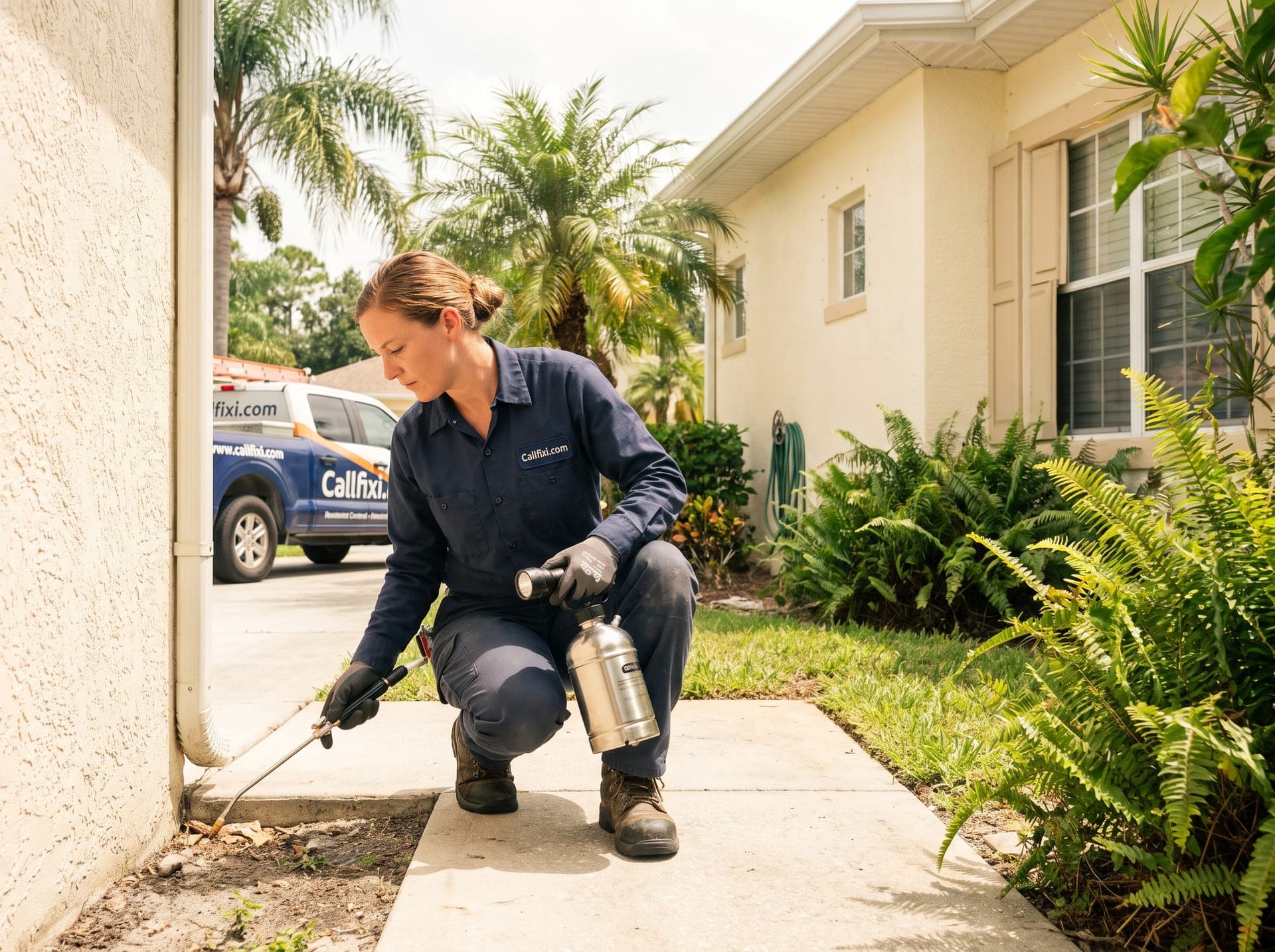
- Inspection firstSpecies identified before anything is sprayed. It changes everything.
- Licensed applicatorsState-licensed technicians using products rated for occupied homes.
- Plan sized to the jobQuarterly if the pressure warrants it, one visit if it doesn't.
- Follow-up includedA second visit catches the next hatch cycle, not just today's adults.
Why one treatment is never enough in Florida
There is no killing frost here to reset insect populations, so breeding runs more or less year round and pressure from neighbouring properties never stops. One treatment clears what is inside your walls now. It does nothing about the colony three doors down.
Termites are structural, not a nuisance
Subterranean, drywood and Formosan termites need three different strategies, a dedicated inspection, and a renewable warranty. A perimeter spray does not touch them. Which species you have depends on exactly where the house sits.
The fixes that beat any spray
Sealing the gap under the garage door, fixing the AC condensate line keeping the crawlspace damp, pulling mulch back from the foundation, cutting the branch bridging the roofline. A good technician tells you which of these will do more than the products in their van.
Roaches, ants and what you're actually seeing
German and American cockroaches live differently, breed at different rates and need different products — treating them the same wastes a visit. Ants on the patio at noon and roaches in the kitchen at night are unrelated problems with unrelated answers.
How it works
- 1
Describe what you're seeing
Where, how many, and what time of day you notice them.
- 2
A licensed applicator inspects
Species, entry points, moisture, and conditions around the foundation.
- 3
Treat, then monitor
Initial treatment, a follow-up for the next hatch, then an interval.
Pest Control across Florida
- Pest Control in Miami
- Pest Control in Fort Lauderdale
- Pest Control in West Palm Beach
- Pest Control in Tampa
- Pest Control in St. Petersburg
- Pest Control in Orlando
- Pest Control in Jacksonville
- Pest Control in Naples
- Pest Control in Sarasota
- Pest Control in Fort Myers
- Pest Control in Cape Coral
- Pest Control in Ocala
- Pest Control in Gainesville
- Pest Control in Pensacola