Rodent & Wildlife Removal in Jacksonville, FL
Trapping alone is temporary. Removal, entry-point exclusion and cleanup are one job, and skipping the middle step is why they come back.
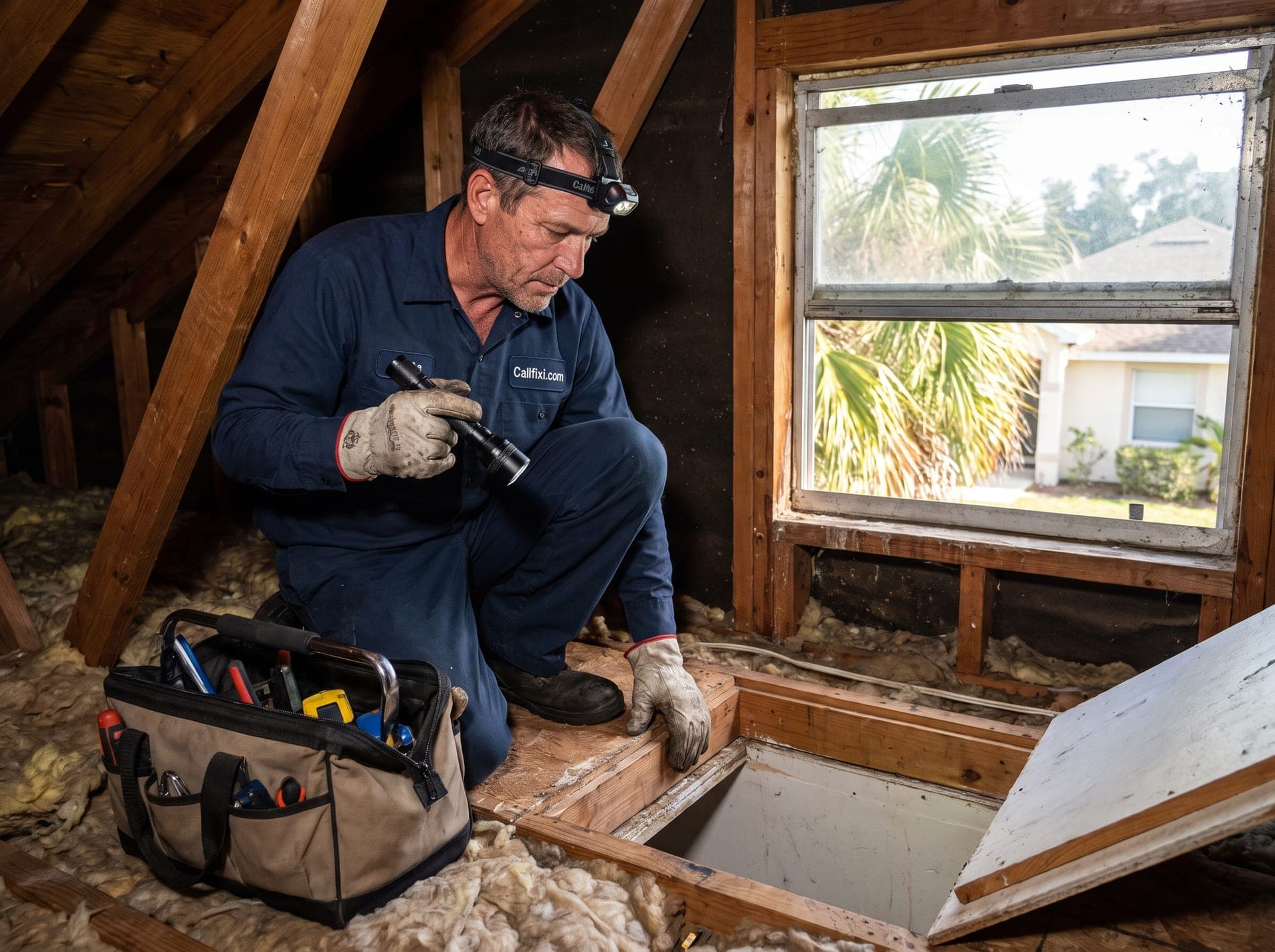
- Sealed, not just trappedEvery gap along the roofline closed with material they can't chew.
- Cleanup includedContaminated insulation removed, not left to draw the next animal in.
- Humane and legalProtected species and birthing seasons handled by a licensed trapper.
- Same or next dayEvery night they're up there is more damage and more mess.
What you're dealing with in Jacksonville
Jacksonville has the oldest wood-frame housing in Florida and the sharpest seasonal driver. Century-old homes in Riverside, Avondale and Springfield have settled enough to open gaps along soffits, foundations and rooflines that simply do not exist in newer construction, and roof rats need only an opening the width of a quarter to use them.
When it happens, and why
This is the strongest seasonal pattern of the fourteen cities. Zone 9a cold snaps from October onward drive rodents indoors in a genuine autumn wave that South Florida never experiences, and call volume climbs sharply and predictably with the first cold nights. Sealing entry points in September beats trapping all winter.
About Jacksonville
Jacksonville is the largest city by land area in the contiguous United States, which means its housing stock spans a century — Riverside and Springfield hold some of the oldest surviving wood-frame homes in the state, while the Southside is largely modern. The St. Johns River runs through the middle of it.
Zone 9a is the coldest of the fourteen cities, and Jacksonville gets genuine winter cold snaps with occasional freezes. That produces real seasonal dormancy — and a burst pipe risk the south of the state never sees.
What rodent & wildlife removal costs in Jacksonville
$220–$530 per removal
Estimated ranges based on published 2026 Florida cost data, not quotes. What you pay depends on the job, your property and the contractor. Always confirm the price before work begins.
Licensing in Duval County
FWC regulates nuisance wildlife trapping. In historic districts, exclusion work on visible exterior elements may need to respect district guidelines — worth raising before work begins.
Rodent & Wildlife Removal in Jacksonville — common questions
- Why does this happen every autumn?
- Jacksonville's zone 9a cold snaps push rodents indoors looking for warmth. It is a real seasonal migration here, unlike further south, and it repeats every year unless the entry points are sealed.
- When should I do exclusion work?
- September, before the first cold nights. Sealing entry points ahead of the autumn push is far more effective and far cheaper than trapping through the winter.
- How many entry points does an old house have?
- Usually more than people expect. A century of settling opens gaps at soffits, foundations and every utility penetration, and a full exterior survey typically finds several.
Areas we cover in Jacksonville
- Riverside
- Avondale
- Springfield
- San Marco
- Ortega
- Mandarin
- Southside
- Atlantic Beach
ZIP codes served: 32204, 32205, 32206, 32207, 32210, 32217, 32223, 32256
Other services in Jacksonville
- Locksmith in Jacksonville
- Plumbing in Jacksonville
- Roofing in Jacksonville
- Pest Control in Jacksonville
- Lawn & Garden Care in Jacksonville
- Home Cleaning in Jacksonville
- Carpet & Upholstery Cleaning in Jacksonville