Rodent & Wildlife Removal in Miami, FL
Trapping alone is temporary. Removal, entry-point exclusion and cleanup are one job, and skipping the middle step is why they come back.
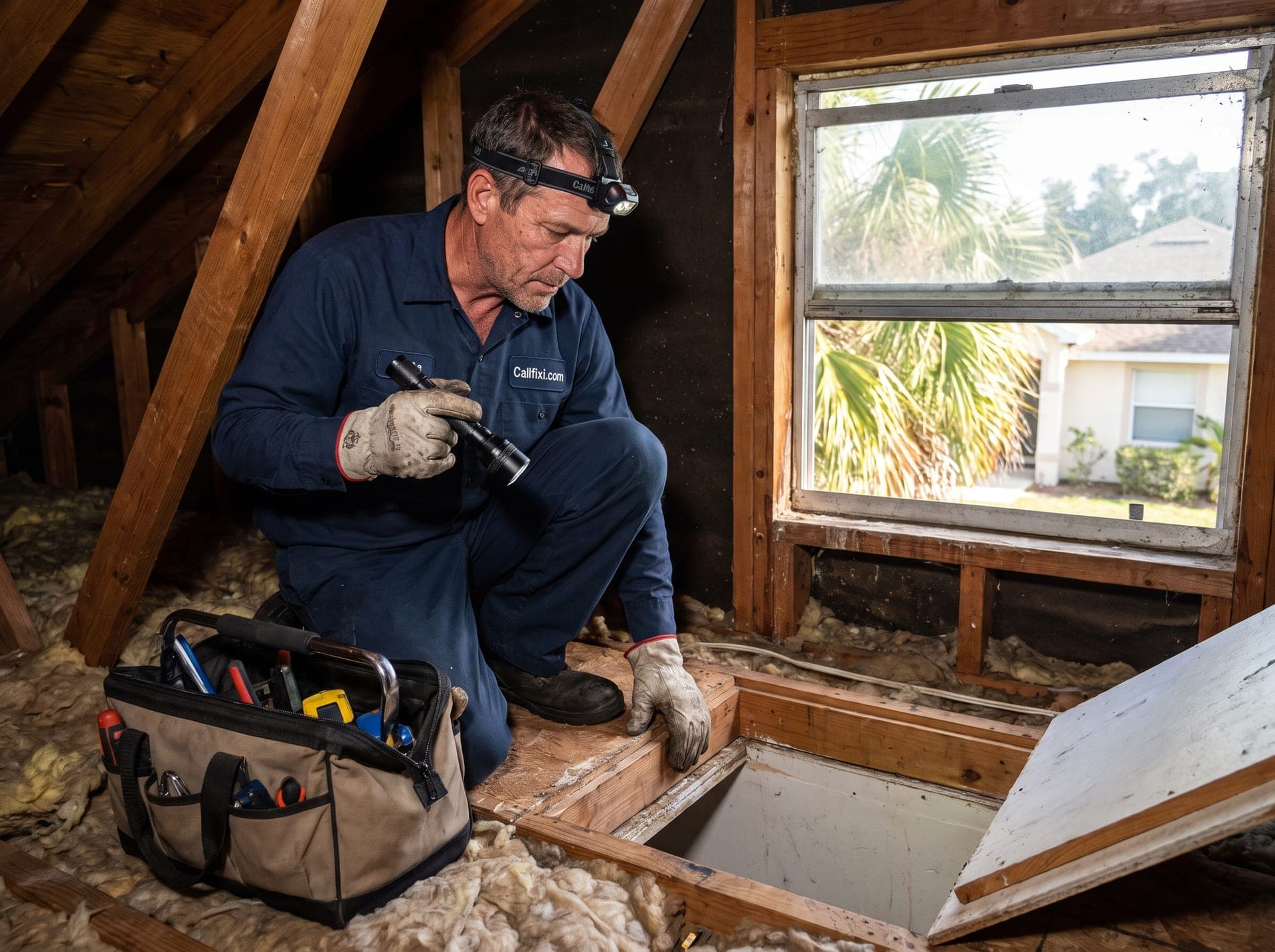
- Sealed, not just trappedEvery gap along the roofline closed with material they can't chew.
- Cleanup includedContaminated insulation removed, not left to draw the next animal in.
- Humane and legalProtected species and birthing seasons handled by a licensed trapper.
- Same or next dayEvery night they're up there is more damage and more mess.
What you're dealing with in Miami
Miami's wildlife calls split between the ordinary and the distinctly South Florida. Roof rats are constant in the older Little Havana and Coconut Grove housing, moving along power lines and overhanging trees into attics. Green iguanas are the other half — an invasive species that burrows under seawalls, patios and foundations, and their tunnelling causes genuine structural undermining.
When it happens, and why
Zone 10b means no seasonal reset, so rodent activity runs year round rather than pushing indoors each autumn. Iguana numbers do respond to cold — rare cold snaps stun them, which produces the occasional news story — but populations rebound quickly. Rat activity in attics is loudest just after dark and before dawn.
About Miami
Miami is dense, coastal and built in layers — pre-war bungalows in Little Havana and Coral Gables sitting alongside towers thrown up in the condo boom. Much of the city sits barely above sea level on porous limestone, which is why groundwater is close to the surface almost everywhere.
Zone 10b means Miami effectively has no winter. Nothing dies back, nothing goes dormant, and insect populations breed through what the rest of the country calls the off season. Summer humidity sits high enough that anything left damp indoors stays damp.
What rodent & wildlife removal costs in Miami
$290–$690 per removal
Estimated ranges based on published 2026 Florida cost data, not quotes. What you pay depends on the job, your property and the contractor. Always confirm the price before work begins.
Licensing in Miami-Dade County
Nuisance wildlife trapping in Florida is regulated by the Florida Fish and Wildlife Conservation Commission. Green iguanas are invasive and handled differently from native species — a licensed trapper will know which rules apply to what is in your attic.
Rodent & Wildlife Removal in Miami — common questions
- Are iguanas actually damaging my property?
- They burrow, and those tunnels undermine seawalls, patios and foundations over time. In canal-front and waterfront Miami properties it is a structural issue, not just a nuisance.
- What is running across my ceiling at night?
- Almost certainly roof rats, which are the dominant rat in Florida and are excellent climbers. Activity peaks just after dark and again before dawn.
- Can I remove wildlife myself?
- Native species are protected to varying degrees and Florida regulates nuisance trapping. Getting it wrong is a legal problem as well as a cruel one — a licensed trapper knows which rules apply.
Areas we cover in Miami
- Little Havana
- Coral Gables
- Coconut Grove
- Brickell
- Wynwood
- Kendall
- Hialeah
- Little Haiti
ZIP codes served: 33125, 33127, 33130, 33131, 33133, 33135, 33143, 33165
Other services in Miami
- Locksmith in Miami
- Plumbing in Miami
- Roofing in Miami
- Pest Control in Miami
- Lawn & Garden Care in Miami
- Home Cleaning in Miami
- Carpet & Upholstery Cleaning in Miami